
Buy Custom Golf Carts in Murrells Inlet: 2026 Guide

Table of Contents
Custom Golf Carts Built for Grand Strand Living
New vs. Refurbished Golf Carts: Which Fits Your Budget?
Golf Cart Customization Ideas That Actually Get Used
Seating, Roofs, and Storage for Families
Lift Kits, Tires, and Lighting for Beach and Trail
Batteries, Motors, and Paint: The Upgrades Buyers Underestimate
Build Timelines and How to Sequence a Custom Order
Golf Cart Accessories Worth Adding Before Delivery
Golf Cart Financing: What 0% APR Actually Means for You
Street-Legal Carts and Low-Speed Vehicle Rules in South Carolina
What Equipment a Low-Speed Vehicle Typically Needs
Registration, Title, and Insurance
Where You Can and Cannot Drive
Test Drives, Delivery, and Service After You Buy Custom Golf Carts
Conclusion: Your Next Step in Murrells Inlet
Frequently Asked Questions
Last Updated: October 12, 2026
Custom Golf Carts Built for Grand Strand Living
If you want to buy custom golf carts in Murrells Inlet, the smartest first step is understanding what "custom" actually means at a dealership level. It is not a paint color and a set of wheels. A real custom build starts with the frame, motor, and battery platform, then adds seating, roof, storage, and lighting around how your family actually uses the cart.
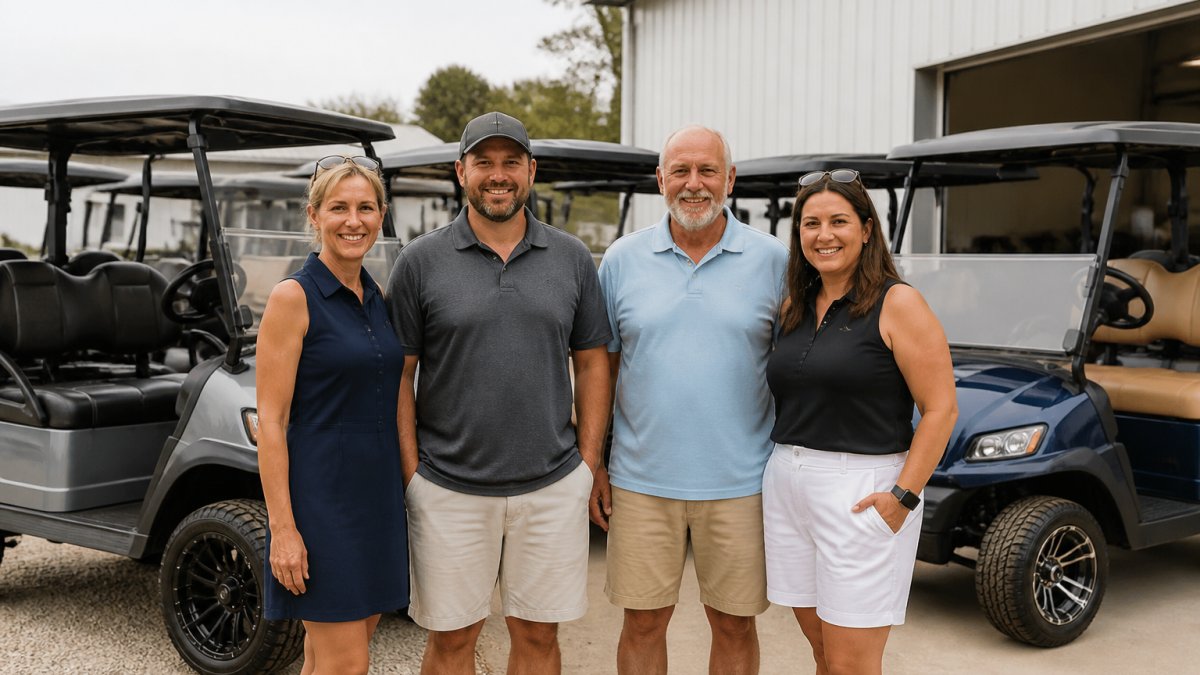
At Low Country Golf Carts, we build carts for three kinds of owners: retirees running errands inside their community, families hauling kids and beach gear, and vacation homeowners who need reliable transportation for guests. Each group wants something different, and that is the point.

New vs. Refurbished Golf Carts: Which Fits Your Budget?
A certified refurbished cart is a used cart that has been mechanically inspected, repaired where needed, and reconditioned before resale. New carts give you the latest battery technology and a full factory warranty, while refurbished carts put you on the road for less.
Here is how the two compare on the things that matter most:
Factor | New Cart | Certified Refurbished |
Upfront cost | Higher | Lower |
Battery condition | New | Tested and replaced as needed |
Warranty coverage | Full factory term | Dealer-backed, varies by cart |
Best for | Long-term daily use | Budget-conscious buyers, seasonal use |
The honest trade-off: refurbished carts vary in condition, so the inspection process matters more than the price tag. Ask what was replaced and what was left alone.
Pro Tip When you inspect a refurbished cart, check the battery date codes first. Batteries are the single most expensive wear item, and a cart with fresh batteries is a fundamentally different purchase than one with tired cells.
Golf Cart Customization Ideas That Actually Get Used
Most golf cart customization ideas sound great on a spec sheet and sit unused six months later. We have watched which upgrades owners keep loving and which ones they regret, and the pattern is consistent: comfort and shade beat cosmetics every time. The upgrades below are the ones that hold their value in daily use, plus the trade-offs nobody mentions at the sales counter.
Seating, Roofs, and Storage for Families
Extra seating is the most requested family upgrade, and it changes the cart more than people expect. A four-seat conversion adds weight, which affects range and braking, so the build has to account for it from the start. On a typical 48-volt electric cart, adding two rear seats and passengers can cut usable range noticeably, and it puts more load on the rear springs and brake system.
A solid roof is not optional in coastal sun. Look for a molded ABS or aluminum roof rather than a thin plastic shell, and confirm the roof supports are tied into the frame, not just the body. For storage, a locking under-seat compartment or a dash-mounted locking glovebox keeps phones, wallets, and small valuables out of sight when the cart is parked at a beach access or restaurant.
Lift Kits, Tires, and Lighting for Beach and Trail
Lift kits raise ground clearance so you can clear curbs and unpaved paths without scraping. The common sizes are 3-inch, 4-inch, and 6-inch; a 3-inch lift with 20-inch tires is the sweet spot for most coastal neighborhoods, while a 6-inch lift with 23-inch tires is for owners who genuinely drive on sand, gravel, or rutted trails. Bigger tires change your speedometer reading and reduce torque, so the controller and motor may need to be reprogrammed or upgraded to match.
Tire choice matters as much as the lift. Street tires are quiet and last longest on pavement. All-terrain tires handle sand and gravel but are louder and wear faster on asphalt. Sand tires (paddle or wide-flotation) are for beach-only use and are poor on pavement. Add LED lighting if you drive at dusk, both for visibility and so other drivers see you.
Watch Out Lifting a cart without adjusting the suspension and brakes creates a cart that looks capable but stops poorly. Insist that any lift kit is installed as a complete package, not a cosmetic add-on.
Batteries, Motors, and Paint: The Upgrades Buyers Underestimate
Battery platform is the single biggest decision on an electric build. Lead-acid batteries cost less upfront but need watering, have a shorter lifespan, and lose range in cold weather. Lithium (LiFePO4) batteries cost more upfront but are lighter, charge faster, hold voltage better on hills, and typically last several times as many charge cycles. The weight savings alone can add range and improve acceleration.
Motor and controller upgrades are for owners who want more speed or torque, but they are not a bolt-on afterthought. A higher-amperage controller paired with a stock motor can overheat it; matched motor-and-controller packages are the reliable path. On paint, a factory-style automotive paint or a quality vinyl wrap both hold up in salt air, but wraps are easier to change later and protect the original finish. Custom seats, dash kits, and sound systems are the cosmetic upgrades owners actually keep.
Build Timelines and How to Sequence a Custom Order
Order accessories at build time, not after. Factory-installed windshields, enclosures, and lighting fit the cart properly and cost less than retrofitting later. Ask your dealer for a written build sheet with each item and its lead time, so you know what is holding up delivery.
Golf Cart Accessories Worth Adding Before Delivery
Order accessories at build time, not after. Factory-installed windshields, enclosures, and lighting fit the cart properly and cost less than retrofitting later.
Accessories added during the build are covered under the same purchase and financing as the cart itself.
Golf Cart Financing: What 0% APR Actually Means for You
A 0% APR offer means you pay no interest on the financed amount for the promotional term, provided you make every payment on time. It is a real benefit, not a gimmick, but the terms matter.
Ask three questions before signing: How long does the 0% period last? What is the rate after it ends? What happens if a payment is late? A single missed payment can void the promotional rate on some agreements, which is the detail most buyers miss.
Low Country Golf Carts offers 0% APR financing options designed to keep monthly payments predictable. We walk through the full terms before you commit, so there are no surprises in the fine print.
Street-Legal Carts and Low-Speed Vehicle Rules in South Carolina
A street-legal cart in South Carolina is generally registered and titled as a low-speed vehicle, which means it must meet specific equipment and safety requirements to operate on public roads. Requirements vary by state and by local ordinance, and some communities restrict where low-speed vehicles may be driven. This is the section most dealer pages skip, so here is the practical version.
What Equipment a Low-Speed Vehicle Typically Needs
Under the federal low-speed vehicle standard that most states, including South Carolina, build their rules around, a qualifying vehicle generally must have:
Headlights, tail lights, brake lights, and turn signals
A windshield (often with a wiper)
Rearview mirrors (driver and passenger side)
A parking brake
Seat belts for each occupant
A horn
Reflectors
A stock golf cart usually has none of these beyond basic lights, which is why a cart sold as street-legal is built or converted with a full lighting and safety package. Confirm the current equipment list with the South Carolina Department of Motor Vehicles before you buy, because the list and the inspection process can change.
Registration, Title, and Insurance
In South Carolina, a low-speed vehicle is generally titled and registered through the DMV, and the owner typically needs to show proof of insurance and pay the applicable fees. A common pattern is that the cart must be inspected or have its VIN verified before a title is issued, and the title is what allows registration. Without a title, you cannot register the cart for road use, which is why buying a cart with a clean title matters if street use is the goal.
Insurance is a separate step. Many auto insurers write low-speed vehicle policies, but coverage and price vary, so get a quote before you commit to a build. Some communities and HOAs also require proof of registration and insurance before allowing carts on their private roads.
Where You Can and Cannot Drive
Low-speed vehicles are generally restricted to roads with posted speed limits at or below a set threshold (commonly 35 mph), and they are typically prohibited on highways and roads with higher limits. Local ordinances can be stricter. Some Grand Strand communities allow carts on certain streets, some require permits, and some prohibit them entirely on public roads within their limits. Before you buy, check three things: the state DMV rules, the city or county ordinance for your route, and your HOA or community association rules.
Pro Tip If street use is your goal, ask the dealer to confirm in writing that the specific cart you are buying can be titled and registered in South Carolina. A cart that is 'street-legal equipped' is not the same as a cart that is actually titled and registered.
We will tell you honestly whether a cart can be registered for your intended route.
Test Drives, Delivery, and Service After You Buy Custom Golf Carts
A test drive is the only way to know whether a cart fits you. Seat height, pedal reach, and steering effort all matter more than the spec sheet suggests, especially for older drivers.
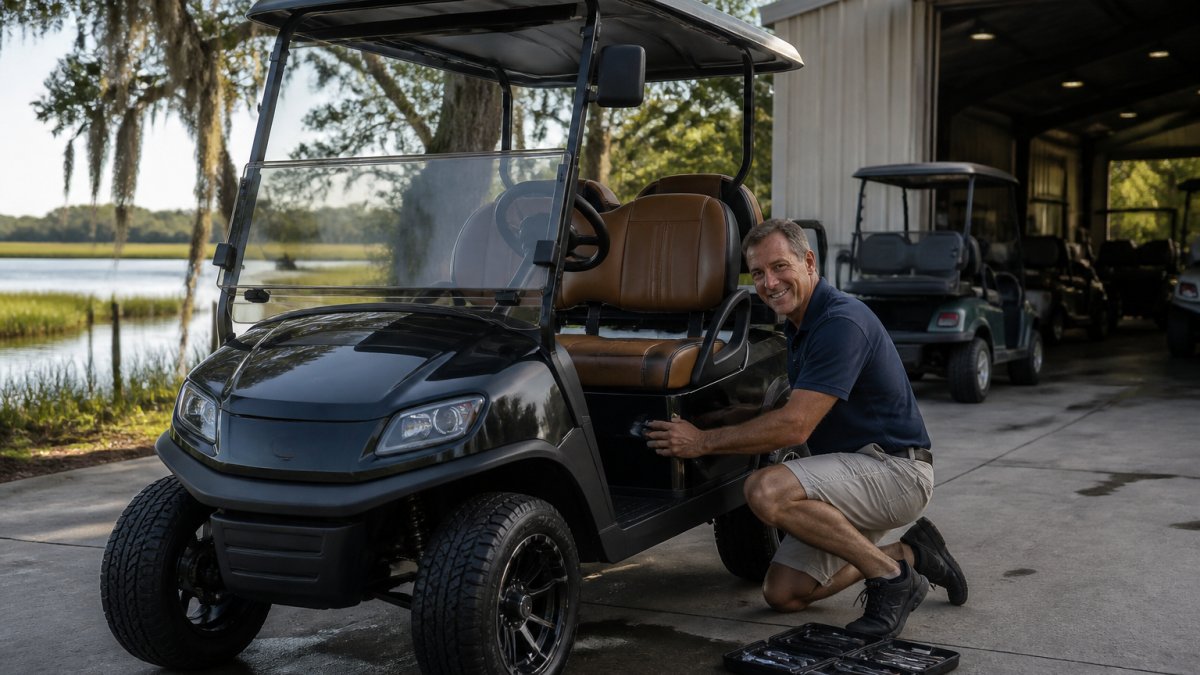
Low Country Golf Carts offers complimentary test drives and free delivery within the Lowcountry area, so you can try a cart in your own neighborhood before deciding. After the sale, our service team handles repairs and scheduled maintenance, which matters when a cart is your daily transportation.
Key Takeaway The dealership you choose matters as much as the cart. Local service, parts availability, and a team that answers the phone are what keep you on the road years after the purchase.
Conclusion: Your Next Step in Murrells Inlet
Choosing the right cart comes down to matching the build to how you actually live, not to the longest feature list. That takes an honest conversation about your routes, your passengers, and your budget.
Low Country Golf Carts is a locally owned dealership serving the Grand Strand with custom builds, certified refurbished options, 0% APR financing, complimentary test drives, and free local delivery. Book online today and we will help you spec a cart that fits your family, your neighborhood, and your budget.
Frequently Asked Questions
Where can I buy a custom golf cart near Murrells Inlet?
Low Country Golf Carts is a locally owned dealership in Murrells Inlet that builds and sells custom golf carts for the Grand Strand area. They offer new and certified refurbished carts, custom builds tailored to your seating and accessory needs, complimentary test drives, and free delivery within the Lowcountry. You can book a test drive online or visit the dealership to see current inventory and discuss your build.
How much does a custom golf cart cost?
Pricing depends on the base cart you choose, whether it is new or refurbished, and which custom golf cart accessories you add, such as lift kits, upgraded seating, or enclosures. Because every build is different, Low Country Golf Carts quotes each cart individually. Contact them directly for current pricing on your specific configuration, and ask about 0% APR financing to spread the cost into monthly payments.
Should I buy a new or refurbished golf cart?
New carts give you the latest features, full warranty coverage, and zero prior wear. Refurbished carts cost less upfront and, when properly inspected and serviced, deliver reliable performance for beach trips, neighborhood errands, and golf course commutes. If budget matters most, a certified refurbished cart from a local dealer with a service department is often the smarter buy. Test-drive both before deciding.
Are golf carts street legal in South Carolina?
South Carolina allows low-speed vehicles on roads with speed limits of 35 mph or less when the cart meets federal safety equipment requirements, including headlights, turn signals, mirrors, seat belts, and a windshield. Local rules vary by municipality, so confirm requirements with your city or county before riding on public roads. Low Country Golf Carts can walk you through which carts qualify and what equipment is needed.
BOOK ONLINE

Comments