
Best Golf Cart Customization Ideas for 2026

Table of Contents
Why Golf Cart Customization Matters
Styling and Aesthetic Upgrades for Golf Carts
Custom Paint and Vehicle Wraps
Graphics, Racing Stripes, and Personalized Details
Comfort and Seating Customization
Custom Seats and High-Back Upholstery
Extra Seating and Two-Tone Options
Wheels, Tires, and Suspension Upgrades
Custom Wheels and Tire Selection
Lift Kits and Lowered Golf Cart Options
Golf Cart Lighting Upgrades and LED Enhancements
LED Lighting, Underglow, and Accent Lights
Brake Lights, Turn Signals, and Safety Features
Golf Cart Accessories and Practical Add-Ons
Roof Systems and Weather Protection
Trailer Hitches, Storage, and Utility Features
Performance and Motor Upgrade Ideas
Golf Cart Upgrade Ideas by Use Case and Budget
Budget Tiers and Installation Considerations
Compatibility, Safety, and Legality
Frequently Asked Questions
Last Updated: October 8, 2026
Why Golf Cart Customization Matters
Golf cart customization transforms a standard vehicle into a reflection of your lifestyle and needs.
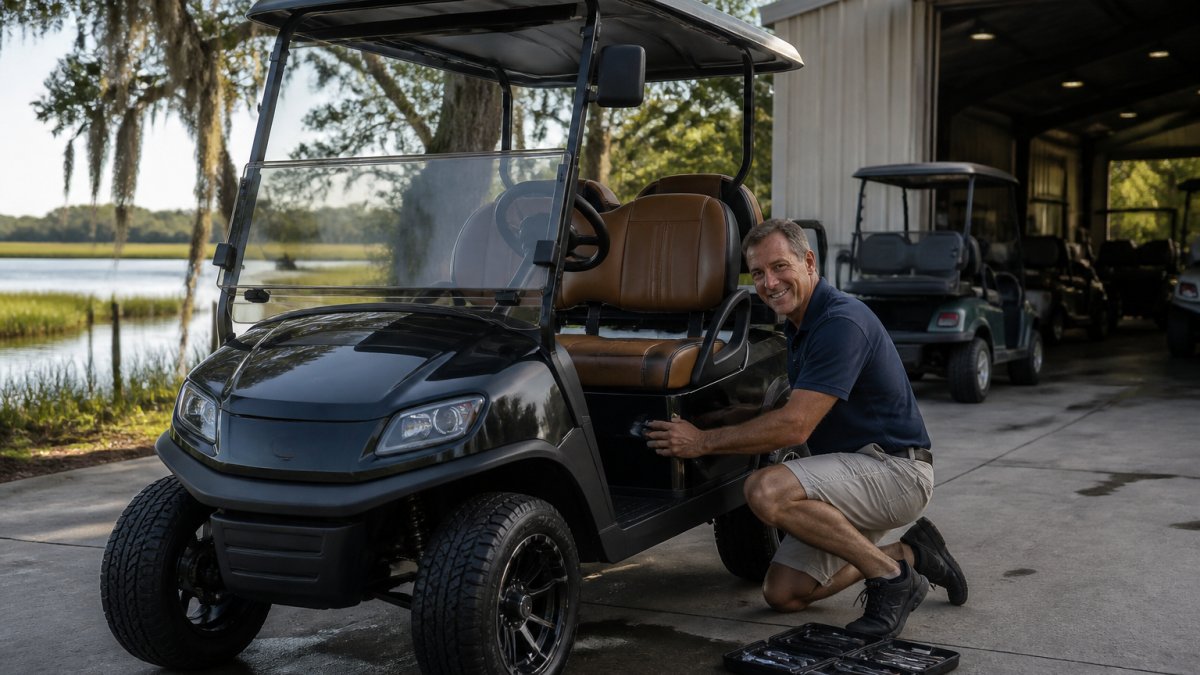
At Low Country Golf Carts, we work with customers to help them achieve something uniquely theirs. The difference between a stock vehicle and a customized one often comes down to thoughtful upgrades that match your actual use case. A roof system protects you from coastal weather.
The real value of golf cart customization isn't just visual, it's practical. A well-customized cart holds its appeal longer, performs better in your specific environment, and delivers genuine utility that a standard model can't match.
Styling and Aesthetic Upgrades for Golf Carts
Custom paint and wraps are the most visible way to personalize a golf cart. A fresh paint job completely changes how the vehicle looks and feels. You can go bold with a solid color that turns heads, or subtle with a two-tone design that complements your home or resort aesthetic.

Custom Paint and Vehicle Wraps
A quality paint job starts with proper surface preparation. The cart's existing finish gets stripped, sanded, and primed before new paint is applied. This process ensures the color adheres properly and lasts through coastal weather, salt air, humidity, and UV exposure all take a toll on exposed paint.
Custom paint offers unlimited color options and a permanent finish. Wraps are faster to apply and easier to change, but they require careful installation to avoid bubbles or peeling. Both options protect your cart's resale value by keeping the original paint underneath intact.
Pro Tip When choosing a paint or wrap design, consider how it will look in different lighting. A color that looks great in bright sunlight might feel flat on cloudy days or at dusk. Request samples or mockups before committing.
Graphics, Racing Stripes, and Personalized Details
Graphics and racing stripes add personality without a full repaint. A simple stripe down the center or along the sides creates motion and visual interest. Custom graphics, team logos, family names, or geometric patterns, turn a cart into a conversation piece.
These details work best when they complement the cart's color and body style. Busy graphics on a small cart can feel overwhelming, while a single bold stripe or nameplate keeps things clean and intentional. Many customization shops can design graphics digitally so you see the final result before installation.
Comfort and Seating Customization
Stock golf cart seats are functional but basic. They're designed for short rides around the course, not extended use on rough terrain or all-day recreational outings. Custom seating transforms the comfort level and makes longer drives genuinely enjoyable.
Custom Seats and High-Back Upholstery
High-back seats with headrests provide support and reduce fatigue on longer rides. Premium upholstery materials, leather, marine-grade vinyl, or performance fabrics, resist moisture and UV damage better than standard cloth. Two-tone upholstery adds visual interest while practical materials like marine vinyl handle spills and salt spray without staining.
The upgrade from stock to custom seating is noticeable on the first drive. Your back gets proper support, your neck doesn't strain, and the overall ride feels more refined. For families or anyone with mobility concerns, high-back seats with armrests are worth the investment.
Key Takeaway Comfort upgrades pay dividends if you use your cart regularly. A cart you actually enjoy sitting in gets used more and provides better value over its lifetime.
Extra Seating and Two-Tone Options
Adding extra seating expands what your cart can do. A rear-facing bench seat lets you transport grandchildren or friends. Some carts accommodate jump seats or additional benches for utility. Two-tone upholstery, contrasting colors for the driver's area and passenger section, creates visual separation and makes the interior feel intentional rather than generic.
When adding seating, verify that your cart's frame and electrical system can handle the extra weight. Low Country Golf Carts can assess your specific needs and recommend the right combination of seating and power upgrades.
Wheels, Tires, and Suspension Upgrades
Wheels and tires affect both how your cart looks and how it handles different terrain. Stock wheels are functional but forgettable. Custom wheels change the entire appearance and can improve performance depending on the style and construction.
Custom Wheels and Tire Selection
Custom wheels come in various styles, classic, modern, sport, or luxury designs. They're available in different sizes, which affects ride height and ground clearance. Larger wheels give a lifted appearance even without suspension changes. Tire selection matters too: all-terrain tires grip better on grass and unpaved paths, while street tires work best on paved surfaces.
Wheel and tire combinations should match your primary use. If you spend most time on golf courses or manicured paths, standard tires work fine. If you navigate rough terrain, beaches, or uneven ground, all-terrain tires and sturdy wheels are worth the upgrade.
Lift Kits and Lowered Golf Cart Options
A lift kit raises the cart's body several inches, increasing ground clearance and creating a more imposing stance. Lowered carts sit closer to the ground for a sleek appearance. Both options require suspension modifications and potentially longer shocks to maintain proper ride quality.
Lift kits make sense if you navigate uneven terrain, sand, or areas with obstacles. They improve approach angles and reduce the risk of getting stuck. Lowered carts appeal to owners prioritizing style over utility, they look sharp but work best on smooth, maintained surfaces.
Golf Cart Lighting Upgrades and LED Enhancements
Lighting serves dual purposes: safety and style. LED upgrades improve visibility and add character that sets your cart apart.
LED Lighting, Underglow, and Accent Lights
LED headlights and taillights are brighter and more energy-efficient than halogen bulbs. They also last longer, reducing maintenance. Underglow lighting, LEDs mounted under the frame, creates a striking visual effect, especially at dusk or in low light. Accent lights on the roof, dashboard, or wheel wells add personality without compromising function.
When upgrading lighting, ensure your cart's electrical system can handle the additional load. LED technology draws less power than older options, but adding multiple light sources still requires planning. Check your battery capacity and consider whether you need a performance motor upgrade to maintain adequate range.
Watch Out Check local regulations before installing underglow or accent lighting. Some jurisdictions restrict certain light colors or placement. What looks great at a resort might violate ordinances in other areas.
Brake Lights, Turn Signals, and Safety Features
Proper brake lights and turn signals are essential if your cart shares roads with other vehicles. Many stock carts lack adequate signaling, which creates safety issues. Aftermarket brake light kits and LED turn signals improve visibility and communicate your intentions clearly.
Safety upgrades also include mirrors, backup cameras, or proximity sensors. These features are particularly valuable if you transport passengers or operate in busy areas. They're practical investments that reduce accident risk and make your cart more road-ready.
Golf Cart Accessories and Practical Add-Ons
Beyond major upgrades, accessories add functionality and convenience.
Roof Systems and Weather Protection
A roof system protects you from sun and rain, essential in coastal climates. Canvas tops are lightweight and collapsible, while hard tops provide permanent coverage and a finished appearance. Windshields and side panels extend protection and reduce wind noise on longer drives.
Roof systems affect your cart's weight and electrical load, particularly on electric models. A quality roof also improves resale value by protecting the interior from UV damage and moisture. If you use your cart year-round or in variable weather, a roof system is one of the most practical upgrades available.
Trailer Hitches, Storage, and Utility Features
A trailer hitch expands your cart's utility, you can tow small trailers for groceries, garden supplies, or recreational gear. Storage compartments, under-seat bins, and roof racks maximize cargo capacity without bulky additions. Cup holders, phone mounts, and dashboard organizers improve daily convenience.
These accessories are straightforward to install and immediately useful. They don't significantly impact performance or electrical systems, making them ideal for budget-conscious upgrades.
Performance and Motor Upgrade Ideas
Stock motors work fine for casual use, but performance upgrades matter if you frequently navigate hills, rough terrain, or carry heavy loads. Upgraded motors provide more torque and sustained power.
Performance upgrades directly impact battery range and electrical efficiency. A more powerful motor draws more current, which reduces how far you can travel on a full charge. However, if your actual use demands that power, the trade-off is worthwhile.
Consider your terrain honestly. Flat, maintained surfaces don't need performance upgrades. Hilly areas, sandy beaches, or rough ground benefit from extra power.
Golf Cart Upgrade Ideas by Use Case and Budget
Customization works best when it matches your actual needs and financial situation. Different owners prioritize different upgrades based on how they use their carts.
Budget Tiers and Installation Considerations
A modest customization budget covers paint touch-ups, new seat covers, basic LED lighting, or new tires. These upgrades deliver noticeable improvements without major structural changes.
Mid-range projects include quality paint jobs, custom seating, roof systems, or lift kits. These require more specialized tools and potentially professional installation.
High-end customizations might include multiple upgrades, premium materials, and performance modifications. These projects transform a standard cart into a luxury vehicle.
Installation difficulty varies by upgrade. Seat covers and lighting are DIY-friendly. Paint jobs, suspension work, and electrical modifications require professional expertise. Attempting complex work without experience risks damage and safety issues.
Best For Retirees and vacation homeowners benefit most from comfort upgrades like custom seating and roof systems. Families prioritize extra seating and safety features. Customization enthusiasts enjoy aesthetic upgrades like paint, wheels, and lighting.
Compatibility, Safety, and Legality
Before upgrading, verify that modifications are compatible with your cart's make, model, and year.
Safety regulations vary by location. Some jurisdictions restrict underglow lighting or require specific safety equipment if your cart operates on public roads.
Battery range and electrical load are critical considerations for electric carts.
Low Country Golf Carts helps customers navigate these technical details.
Golf cart customization is about creating a vehicle that matches your lifestyle. Whether you prioritize comfort, style, performance, or utility, thoughtful upgrades deliver genuine value.
At Low Country Golf Carts, we work with customers to design custom builds that balance aesthetics, functionality, and budget.
Frequently Asked Questions
What are the best golf cart customization ideas for comfort and style?
The best customization ideas combine comfort and aesthetics. Start with custom seats and upholstery, which improve long-term enjoyment. Add LED lighting upgrades for safety and visual appeal, then consider wheels and tires that match your style. For families, extra seating and a quality roof system provide both comfort and utility. Personalize with custom paint or vehicle wraps to make your cart truly unique. Choose upgrades based on how you use your cart and your budget.
Are golf cart lift kits worth the investment?
Lift kits offer real benefits if you need ground clearance for terrain or want a specific look. They improve approach angles on uneven surfaces, provide better visibility, and allow for larger custom wheels and tires. However, they affect ride height, may impact battery range on electric carts, and require professional installation. Consider whether you actually need the clearance or if the aesthetic appeal justifies the cost. Consult with your dealer about compatibility with your specific cart model and year.
How much does it typically cost to customize a golf cart?
Golf cart customization costs vary widely based on the upgrades you choose. Simple additions like custom seat covers or basic LED lighting are affordable entry points. Mid-range projects like wheels, tires, and paint jobs require moderate investment. Full customizations including lift kits, performance upgrades, and premium seating can be substantial. Budget tiers depend on your cart model, the quality of materials, and installation complexity. Contact Low Country Golf Carts for a personalized quote based on your specific customization goals.
What should I consider before modifying my golf cart?
Before customizing, verify compatibility with your cart's make, model, and year. Check electrical load capacity for lighting upgrades, especially on electric carts, to avoid draining your battery. Review local regulations regarding lift height, lighting, and road-use requirements. Assess installation difficulty and whether you need professional help with tools and labor. Consider how upgrades affect resale value and long-term durability. Plan your budget across phases rather than all at once, and prioritize upgrades that match your primary use case.
BOOK ONLINE


Comments