
Benefits of Buying Local Golf Carts: A 2026 Guide

Table of Contents
Why Buying Local Golf Carts Beats an Online Purchase
How to Finance a Golf Cart Through a Local Dealer
New vs Refurbished Golf Carts: What Local Inventory Offers
Golf Cart Maintenance Tips for Beginners and Local Service Support
Total Cost of Ownership for a Local Golf Cart
Local Regulatory and Legal Compliance for Street-Legal Carts
Mobile Service, Delivery, and Neighborhood Convenience
Conclusion: Choosing a Local Golf Cart Dealer
Frequently Asked Questions
Last Updated: October 4, 2026
Why Buying Local Golf Carts Beats an Online Purchase
Buying local golf carts means you can see, drive, and inspect the exact vehicle before money changes hands, and you have a real dealership to call when something goes wrong.
Online listings look tempting: polished photos, endless specs, a lower price on screen. Then the cart arrives, the batteries are weaker than advertised, and the seller stops answering emails.
Here is the case for staying local, in plain terms.
You get accountability with a name and a face. When you buy from a neighbor, problems get solved in person.
You get real after-sales support. U.S. Consumer Product Safety Commission guidance on off-road vehicle safety notes that proper maintenance and use directly affect vehicle safety outcomes.
Key Takeaway The cheapest sticker price is rarely the cheapest purchase. Factor in delivery, inspection, and the cost of one failed repair before you compare an online listing to a local cart.

How to Finance a Golf Cart Through a Local Dealer
Financing a golf cart through a local dealer works like financing a car: you apply, the dealer reviews your credit, and you sign a term agreement on the cart you have already inspected. Low Country Golf Carts offers 0% APR financing options to qualified buyers.
The process is simpler than most people expect:
Pick the cart you want after a test drive
Complete a short credit application at the dealership
Review the term length and monthly payment in writing
Sign and take delivery, often the same week
Ask one question before you sign: what is the total amount paid over the life of the agreement? That number cuts through every financing pitch.
If you are only in the area part of the year, financing can still make sense: a cart you own holds value and stays ready for your next visit, while a rental burns money every season with nothing to show for it.
Watch Out Never sign a financing agreement for a cart you have not inspected in person. If the vehicle turns out to be a different year, battery condition, or trim level than advertised, you are still on the hook for the payments.
New vs Refurbished Golf Carts: What Local Inventory Offers
New and refurbished golf carts differ mainly in price, battery condition, and cosmetic wear, not in whether they can do the job.
New golf carts come with the latest features, a full factory warranty, and zero prior wear. They suit buyers who want the newest technology and plan to keep the cart for a decade or more.
Refurbished golf carts have been inspected, repaired, and brought back to reliable working condition.
What most buyers miss is that battery condition drives most of a used cart's value. Ask for the battery age, the type, and how the cells tested.
Factor | New Cart | Refurbished Cart |
Upfront cost | Highest | Lower |
Warranty | Full factory coverage | Dealer-backed coverage |
Battery condition | Brand new | New or tested |
Best for | Long-term first owners | Budget-conscious buyers |
Customization | Order to spec | Often already built |
Local inventory matters because you can walk the lot, compare carts side by side, and ask the technician who did the work, a conversation you cannot have with an online seller.
Golf Cart Maintenance Tips for Beginners and Local Service Support
Golf cart maintenance for beginners comes down to a short list of habits, but the difference between a cart that lasts eight years and one that needs batteries in year three is the schedule behind those habits.
Charging and battery care.
Charge after each use rather than running the pack flat; repeated deep discharges shorten battery life fastest.
For flooded lead-acid packs, check water levels monthly during heavy-use months and top off with distilled water only, never tap water.
Clean and tighten terminals every few months; corrosion steals range and can stop the cart entirely.
For off-season storage, charge fully first and plan a maintenance charge schedule. A pack left discharged for months may not recover.
Tires, brakes, and the parts that fail quietly.
Check tire pressure monthly; low tires strain the motor, wear unevenly, and hurt range.
Listen to the brakes. Squealing, a soft pedal, or a cart that rolls too far means it is time for service.
Inspect the underside after storms or sand and salt exposure; coastal use accelerates corrosion on frames, cables, and brakes.
A realistic maintenance calendar.
Interval | What to do |
After every use | Plug in the charger; visual walk-around |
Monthly | Tire pressure, terminal check, water level (flooded packs) |
Every 3-6 months | Brake inspection, cable and connection check, torque on lugs |
Annually | Full service inspection, battery load test, alignment check |
Seasonal storage | Full charge, disconnect or maintain charge, cover |
Where local service support actually pays off.
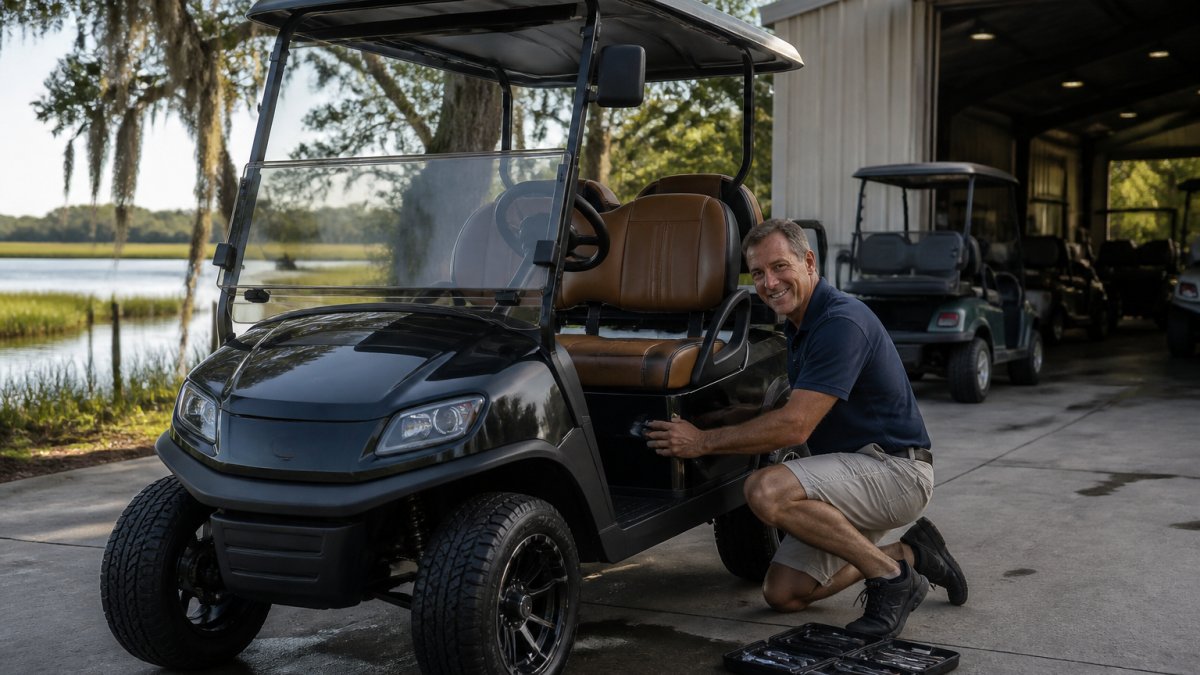
A dealership service department that already knows your cart troubleshoots faster and catches small problems before they strand you. The bigger advantage is logistics: many local dealers offer home pickup and delivery, so a brake job or battery replacement does not require a trailer or a lost weekend.
Waiting for a failure before calling anyone means you are scheduling a repair, not maintenance, and repairs cost more and take longer. The owners who get the longest life treat the annual service visit as non-negotiable.
Pro Tip Ask your dealer for the service record on any used cart you are considering. A documented maintenance history is worth more than a fresh coat of paint.
Total Cost of Ownership for a Local Golf Cart
Total cost of ownership for a golf cart includes far more than the purchase price: batteries, tires, electricity, insurance, and repairs add up over the years you own it. Buyers who compare only sticker prices miss the number that matters.
The major cost categories to plan for:
Purchase or financing cost, including any interest over the term
Battery replacement, the single largest recurring expense on most electric carts
Tires and brakes, which wear with regular neighborhood use
Electricity or fuel, depending on whether you run electric or gas
Insurance and registration, where street-legal use applies
Repairs and preventative maintenance over the life of the cart
A local purchase changes this math two ways. A certified refurbished cart from a dealership typically arrives with tested or new batteries, so you are not absorbing that cost in year one. And local service means small issues get fixed before they become large ones, without shipping the cart anywhere.
Ask any dealer to walk you through the expected costs over five years. A dealership that can answer that question clearly is a dealership that stands behind its inventory.
Local Regulatory and Legal Compliance for Street-Legal Carts
Street-legal golf cart rules vary by state and municipality, so the only reliable answer is the one that applies where you actually drive.
The three layers of rules that apply to you.
State law sets the baseline: what equipment a cart must have, where it may operate, and whether registration or a permit is required.
County or municipal ordinance can be stricter than state law, speed limits on certain roads, hours of operation, and designated cart paths.
HOA or neighborhood covenants are private rules that can prohibit carts entirely or restrict them to certain streets, regardless of what the state allows.
A cart legal on one street may be illegal two blocks over, so the answer has to come from your specific address, not a general guide.
Equipment commonly required for street-legal operation.
Requirements vary, but the equipment list most jurisdictions reference includes:
Headlights, taillights, and turn signals
Brake lights and reflectors
A horn audible from a reasonable distance
Rearview mirrors (side and center)
Seat belts for each occupant
Windshield (often safety glass or approved material)
A slow-moving vehicle emblem where required
Some jurisdictions also set a maximum or minimum speed the cart must be capable of. A cart built for the golf course often lacks several of these items out of the box.
Registration, permits, and insurance.
Depending on where you drive, you may need to register the cart, obtain a permit, or carry liability insurance. Requirements differ for carts used strictly on private property versus carts operated on public roads. Before you buy, confirm:
Whether your community permits golf carts on its streets
What equipment your cart must have to qualify as street-legal
Whether registration, a permit, or insurance is required, and what proof you must carry
Where a local dealer earns their keep.
This is the part online sellers cannot replicate.
Check your state's motor vehicle authority and your municipality's ordinances for the current requirements. South Carolina Department of Motor Vehicles publishes guidance on golf cart operation and registration.
Watch Out Do not assume a cart is street-legal because it has lights and a horn. Equipment requirements, speed limits, and permitted roads are set locally, and an HOA can be stricter than the state. Verify before you buy, not after.
Mobile Service, Delivery, and Neighborhood Convenience
Delivery and mobile service turn a golf cart purchase from a logistics problem into a convenience. Low Country Golf Carts offers free delivery within the Lowcountry area, and our service team handles pickup logistics when a cart needs work.
Without that support, a brake issue on a cart bought two hours away means finding a trailer, a free weekend, and a shop willing to take an unfamiliar vehicle. With a local dealer, you make a call and the cart gets handled.
Neighborhood convenience is the quiet benefit of buying local. Your cart is built for short trips: the beach, the clubhouse, the grocery store, visiting neighbors. A dealer who knows those routes can recommend the right cart for them, from seating capacity to roof coverage to how much range you actually need between charges.
Pro Tip If you plan to use your cart mainly for short neighborhood trips, prioritize battery range and seating over top speed. Most buyers overbuy on performance and underbuy on comfort.
Conclusion: Choosing a Local Golf Cart Dealer
The hardest part of buying a golf cart is not picking a color. It is trusting the cart will still run well two years from now, and that someone will answer when it does not, trust much easier to build with a dealer you can walk into.
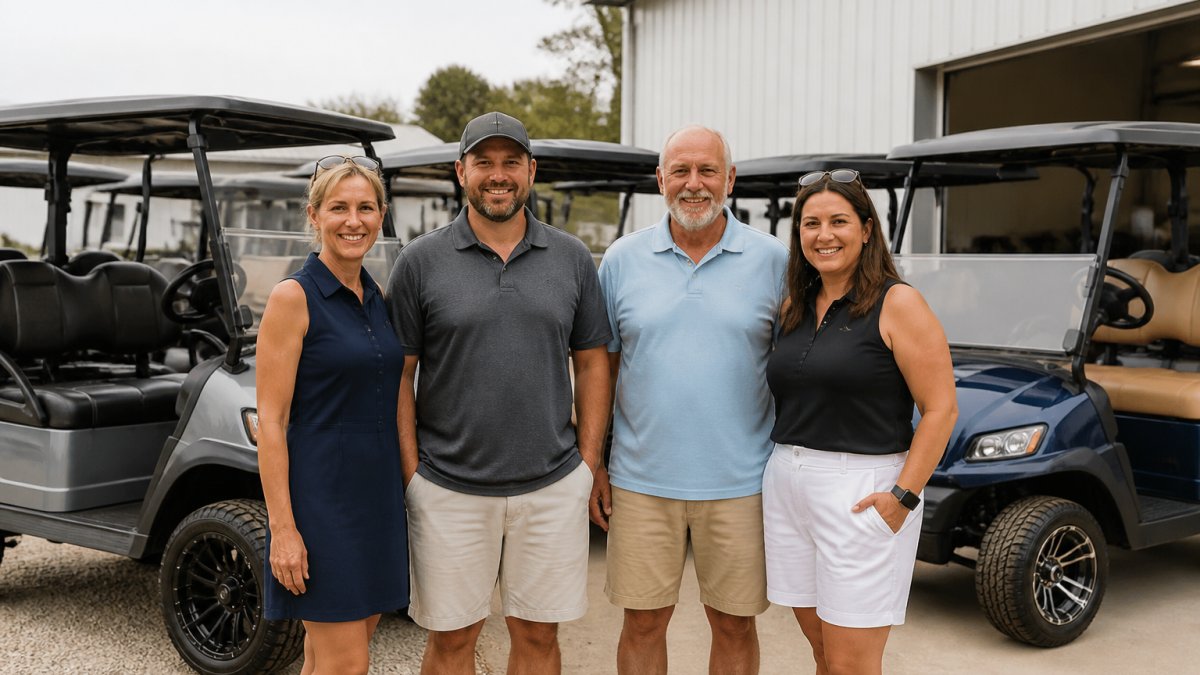
Low Country Golf Carts is a locally owned dealership in Murrells Inlet serving the Grand Strand with new and refurbished carts, custom builds tailored to your family's needs, complimentary test drives, 0% APR financing options, and free delivery within the Lowcountry area. Our service department handles maintenance and repairs so you are never stuck hunting for help.
Get started with Low Country Golf Carts and find the cart that fits your neighborhood, your budget, and your family.
Frequently Asked Questions
What are the benefits of buying from a local dealership versus online?
A local dealership gives you in-person test drives, immediate access to replacement parts, and a service department you can visit. If something breaks, you can bring the cart in instead of shipping it back. You also get personalized advice on street-legal requirements and customization for your community. Online sellers often leave you handling warranty claims and repairs on your own.
How does local delivery and service impact golf cart ownership?
Local delivery means your cart arrives ready to drive, often with free drop-off within the area. When maintenance is needed, a local service department can pick up the cart or send a mobile technician, cutting downtime from weeks to days. Preventative maintenance visits are easier to schedule, which extends long-term reliability and protects resale value.
Is buying a golf cart a good investment for your property?
A golf cart can add convenience for property management, guest transportation, and neighborhood trips. Refurbished models lower upfront cost while still delivering reliable performance. Financing options like 0% APR make monthly payments manageable. Resale value depends on maintenance records and brand reputation, so buying from an authorized dealer with service history helps protect your investment.
What should you look for when buying a golf cart locally?
Check for a certified pre-owned inspection report, warranty coverage details, and whether the dealer has an on-site service department. Ask about financing terms, delivery, and turnaround time for repairs. Test drive the cart on similar terrain to your neighborhood. Confirm the cart meets street-legal requirements for your community, including lights, mirrors, and speed limits.
BOOK ONLINE

Comments