
9 Best Golf Cart Brands for Families Ranked

Last Updated: November 19, 2026
Quick Summary
The best golf cart brands for families are E-Z-GO for long-term reliability and resale, Club Car for premium comfort and rust-resistant frames, and Yamaha for gas-powered range. We ranked golf cart brands on passenger capacity, safety equipment, ride comfort, reliability, dealer support, and resale value, not sticker price alone.
A four-passenger cart fits two adults and two children comfortably for most family outings.
Look for four-wheel hydraulic brakes rather than rear-only mechanical brakes, especially in hilly neighborhoods.
Ask the dealer to cap top speed and enable a keyed or coded start for teen drivers.
Build a five-year cost estimate covering charging, battery replacement, maintenance, insurance, and resale value.
Confirm street legality with your state motor vehicle agency and homeowners association before buying.
Not sure which family cart fits your crew?
We help Grand Strand families compare new and refurbished golf carts with test drives and 0% APR financing.
Table of Contents
How We Ranked the Best Golf Cart Brands for Families
Choosing among the best golf cart brands for families comes down to four things: how safely the cart carries children, how well it holds up over years of neighborhood use, how easy it is to service locally, and what it actually costs to own. At Low Country Golf Carts, we sell new and refurbished carts, and we ranked these brands on passenger capacity and seating layout, safety equipment, ride comfort, reliability, dealer and parts support, and long-term resale value. We did not rank on sticker price alone, because a cheap cart that needs constant repair is the most expensive cart a family can buy.
The 9 Best Golf Cart Brands for Families Compared
Here is the short version before the detail. The table below summarizes how each brand fits a family.
Brand | Power | Best For | Watch Out For |
E-Z-GO | Electric, gas | Long-term reliability, resale | Higher upfront cost |
Club Car | Electric, gas | Comfort, rust-resistant frame | Premium pricing |
Yamaha | Gas, electric | Range and fuel convenience | More routine maintenance |
Denago | Electric | Modern features on a budget | Smaller dealer network |
Evolution | Electric | Loaded standard equipment | Softer resale value |
ICON | Electric | Street-legal neighborhood use | Build quality below legacy brands |
MadJax | Electric | Custom builds | Custom work adds up fast |
Kawasaki | Gas, electric | Rough terrain, utility | Fewer luxury touches |
E-Z-GO: Best for Long-Term Reliability and Resale
E-Z-GO is one of the brands families often consider for long-term use. Buyers should compare its seating configurations, powertrain options and warranty terms directly with the manufacturer's specifications and a dealer's quote.
Club Car: Best for Premium Comfort and Rust-Resistant Frames
Buyers who want a cart for comfort and durability often compare Club Car models. Check the manufacturer's specifications for frame materials, trim options and street-legal configurations.
Yamaha: Best Gas-Powered Option for Range
Families who prefer gas over plugging in may consider gas-powered models. Check the manufacturer's specifications for engine, suspension and range details.
Denago and Evolution: Best Value for Modern Features
Denago and Evolution are brands some budget-conscious families consider. Compare their standard equipment, dealer coverage and resale outlook against the manufacturers' published specifications and local dealer quotes.
ICON, MadJax, and Kawasaki: Best for Custom Builds and Terrain
If you want a personalized cart, our custom build service can help you choose seating, roofing, and accessories to fit your family.
Finding the Best Electric Golf Cart for Neighborhood Use
The best electric golf cart for neighborhood use depends on how your family actually drives. Here is how to compare electric carts on the factors that matter.
Range and charging. Lithium batteries charge faster and hold range better than older lead-acid packs, and most families find a single overnight charge covers daily errands. Real-world range varies with hills, passengers, and accessories, so ask your dealer for the published range and adjust it for your routes. Ask the dealer for the cart's published range and then discount it for your routes.
Total cost of ownership. Sticker price is only the first line. Build a five-year cost estimate that includes:
Purchase price or financing cost.
Charging electricity, which is typically modest per mile compared with gasoline but varies by local rates.
Battery replacement. Lithium packs last longer than lead-acid but cost more when they fail; ask for the expected cycle life and replacement price in writing.
Routine maintenance: tires, brakes, bearings, and for gas carts, oil and engine service.
Insurance, which many homeowners policies cover only partially for carts used on roads.
Registration and any local fees if the cart is street legal.
Resale value at the end of your ownership period, which varies widely by brand and condition.
A value brand with a low purchase price and a weak resale market can cost more over five years than a legacy brand that holds value. Run the math before you fall for a headline price.
Street legality and practical use. Before buying, confirm whether your community permits low-speed vehicles on local roads and what equipment your state requires for street-legal status. Rules commonly address speed capability, required lighting and mirrors, registration, insurance, and which roads are off limits.
Matching battery to routes. Range needs vary by how far you drive and how many hills you cross. Ask your dealer to match battery capacity to your actual routes rather than the biggest pack on the lot. A family that drives two miles to the pool and back does not need the same pack as one that runs a five-mile loop with four passengers and a cooler.
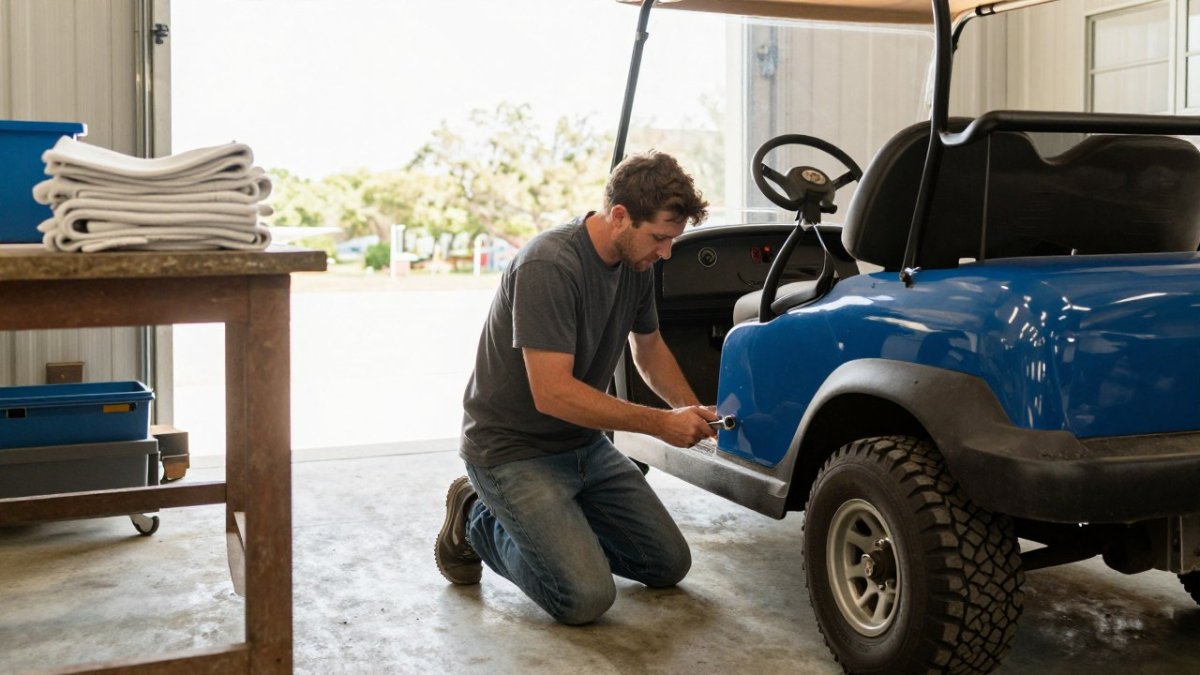
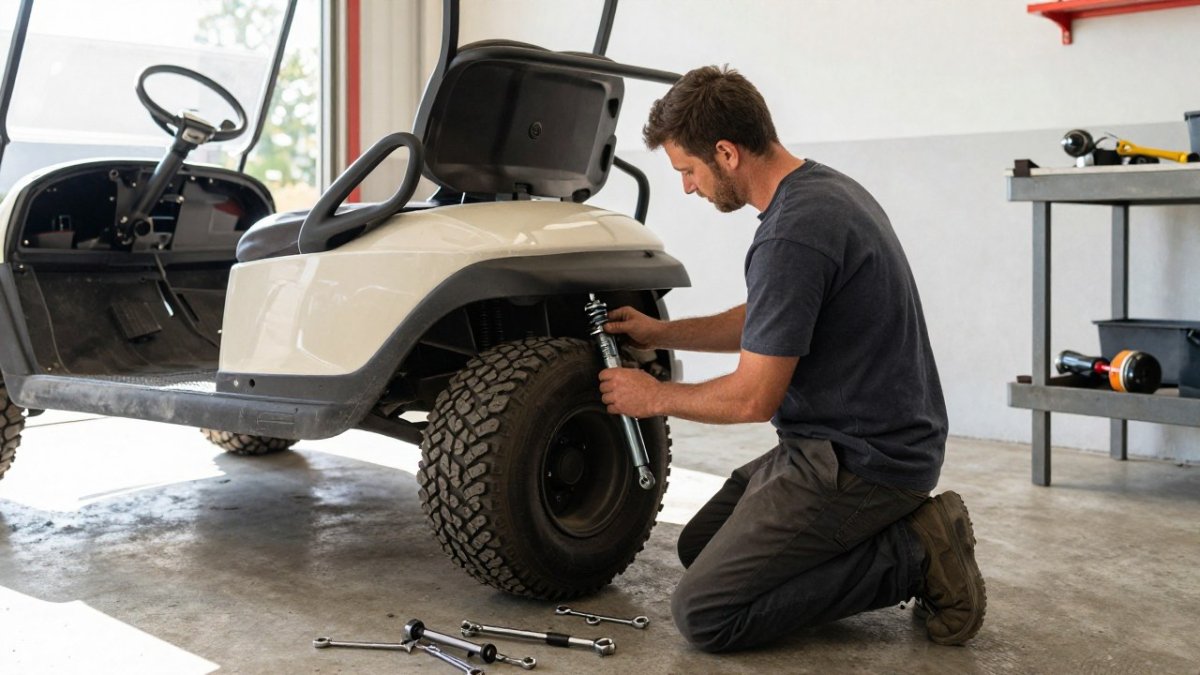
Service and parts. A cart is only as good as the dealer behind it. Ask how far the nearest service center is, whether parts are stocked locally, and what the warranty covers and for how long. Families who rely on a cart for daily transportation should weight service availability more heavily than a feature list.
Watch out: A quoted range figure measured on a flat test track with one driver may not reflect four passengers, hills, and headwind. Ask for a realistic estimate for your routes and load.
Family Golf Cart Safety Features That Actually Matter
Most golf cart safety advice stops at "wear your seat belt." For families, the details matter more: which restraints are actually installed, how the brakes behave on a hill with four passengers aboard, and whether the cart is legally allowed to carry children on the routes you plan to drive. Here is how to evaluate a cart the way a parent would, not the way a brochure does.
Seat belts and restraints. A family cart should have a seat belt for every seating position, including rear forward-facing seats. Families should check the belt type and seating configuration on any cart they consider. Forward-facing rear seats with belts keep children in the driver's view, and the manufacturer's specifications should confirm restraint details for each seat.
Braking. Look for four-wheel hydraulic brakes rather than rear-only mechanical brakes, especially if your neighborhood has hills. Test the parking brake on an incline with the cart loaded, because a brake that holds an empty cart can roll with four passengers and gear aboard.
Lighting and visibility. If the cart will ever touch a road, it needs headlights, taillights, brake lights, turn signals, and a horn to meet low-speed vehicle equipment rules. A rearview mirror and side mirrors are not optional with children aboard. Reflective tape and a slow-moving-vehicle emblem improve visibility to other drivers.
Speed controls. Many modern electric carts include a programmable speed limit, often set by the dealer. For families with teen drivers or young children riding along, ask the dealer to cap top speed and to enable a keyed or coded start.
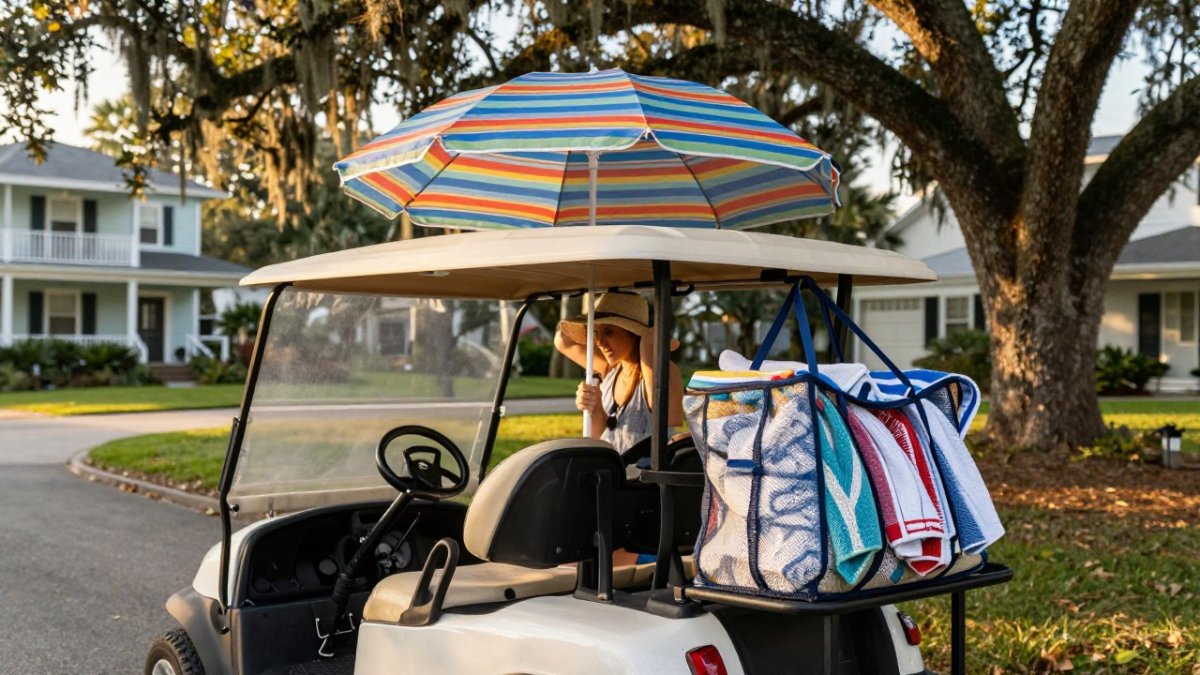
Passenger limits. Never exceed the manufacturer's rated seating capacity, and remember that rated capacity assumes adult weights. Four passengers plus beach gear, a cooler, and a dog can approach or exceed the cart's load rating, which affects braking and stability.
Street legality. Safety equipment and legality are linked. Many communities regulate low-speed vehicles by speed capability, required equipment, registration, and where they may be driven. Confirm with your local motor vehicle agency and homeowners association before assuming a cart is legal on your routes.
Watch out: A dealer who cannot tell you the cart's rated passenger capacity, brake type, and speed setting in writing is a dealer to walk away from, no matter how good the cart looks.
Upgrading safety gear is straightforward with the right cart accessories, from enclosures and mirrors to reflective kits, but accessories do not substitute for proper restraints and brakes.
Why a Four-Passenger Golf Cart Fits Most Families
A four-passenger golf cart fits two adults and two children comfortably, which covers the majority of family outings without the bulk of a six-seater. Four-passenger models with forward-facing rear seats keep children in view when seated with belts.

Choose a four-seater unless you regularly carry more than two kids or guests. Larger families or those who host often should size up to a six-passenger model.
Golf Cart Brands to Avoid and Warning Signs to Spot
When evaluating any golf cart, check for local parts and service support, battery history, frame condition, and service records. If you are weighing a used cart, our new versus refurbished comparison walks through what to check before you buy.
How to Choose the Right Family Cart at Low Country Golf Carts
Start with how you will use the cart: daily neighborhood driving, beach and park trips, or property mobility. Then match seating, power type, and safety equipment to that use. At Low Country Golf Carts, we offer complimentary test drives so you can feel the ride before deciding, 0% APR financing, and free local delivery. Our refurbished carts give budget-conscious families a reliable option, and we are committed to a transparent buying process. Browse our golf carts for sale to see current inventory, or explore financing options to find a payment plan that fits. For current prices or a quote, visit our website.
Buying a family golf cart should feel straightforward, not stressful. If you are tired of comparing specs online and want straight answers from a local team, Low Country Golf Carts is here to help. We offer complimentary test drives, 0% APR financing, custom builds, and free local delivery, all backed by a neighborly, transparent process. Get started with Low Country Golf Carts and find the right cart for your family.
Frequently Asked Questions
Which golf cart brand is the most reliable for families?
E-Z-GO and Club Car consistently rank among the most reliable golf cart brands for families. E-Z-GO and Club Car are among the brands many families consider for reliability. Yamaha is one option if you prefer gas power. Reliability also depends on dealer support and parts availability, so buying from a local dealership that services what it sells matters as much as the badge on the front.
What family golf cart safety features should I look for?
Prioritize seat belts for every seat, and consider forward-facing rear seating. Check brake type, parking brake, and speed settings with the manufacturer's specifications. If you plan to drive on public roads, confirm the equipment your state requires for a low-speed vehicle. Ask your dealer to review the safety setup before you buy.
Is a four-passenger golf cart enough for a family with kids?
A four-passenger golf cart with two forward-facing rear seats suits most families with two children. It keeps everyone facing forward, which is safer than rear-facing jump seats, and leaves room for beach or grocery cargo. Families with three or more kids, or who regularly carry grandparents, should look at six-passenger models. Test the seating layout in person with your whole family before deciding.
Which golf cart brands should families avoid?
Be cautious with products that lack a clear dealer network, parts availability, or a clear warranty. Brands with no local service options can leave you waiting for repairs. Also avoid any used cart without a documented inspection or service history, since poor maintenance is the leading cause of breakdowns. Stick with established brands sold through a dealership that services what it sells.
Is an electric golf cart a good choice for neighborhood use?
Electric carts are the better fit for most neighborhoods. They run quieter, need less routine maintenance than gas models, and have no fuel or exhaust concerns around kids. Modern lithium batteries deliver enough range for daily errands and beach runs, and charging at home is simple. Gas makes sense mainly if you need longer range or have no convenient charging access.
Comments